God Doesn’t Keep Score
Hello, friends,
Happy September. Here’s the Liturgy Reflection for Sunday, September 20 and a related poem by Denise Levertov.
Primary Wonder
Denise Levertov
Days pass when I forget the mystery.
Problems insoluble and problems offering
their own ignored solutions
jostle for my attention, they crowd its antechamber
along with a host of diversions, my courtiers, wearing
their colored clothes; cap and bells.
And then
once more the quiet mystery
is present to me, the throng's clamor
recedes: the mystery
that there is anything, anything at all,
let alone cosmos, joy, memory, everything,
rather than void: and that, O Lord,
Creator, Hallowed One, You still,
hour by hour sustain it.
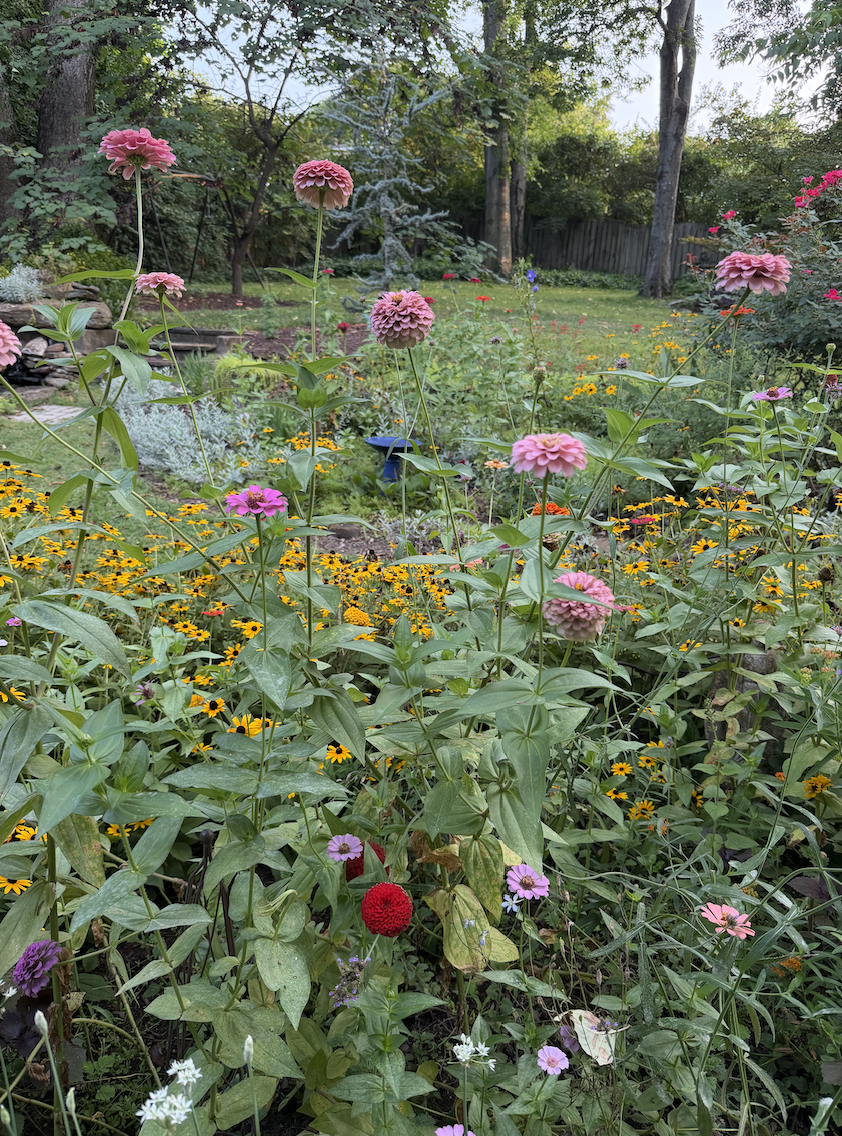
I’m sharing the poem because it speaks to abundance. Denise Levertov was a highly respected twentieth-century American poet. She writes about the way our minds can become crowded with calculations, worries, and problems of everyday life. Sometimes we create our own kind of inner scorecard, keeping track of who gets what. Life itself is a gift—freely given and undeserved.
God’s Ways
Matthew 20:1–16 (vineyard workers);
Isaiah 55:6–9 referenced
Today’s Gospel reminds me of how much I relate to the workers who stood at the end of the line, wondering if they would ever be called to work. I know something about what it feels like to wait while others receive what you have longed for.
For me, that waiting was connected to having children. I remember what it felt like when many, if not most, of my friends were having children and I was not. It was more than waiting, it was a longing, a question—would we ever be parents?
When my husband and I finally adopted our son, I felt blessed. I had waited and I received that which I had longed for. I found myself comparing our story to the biblical narratives of women—and men—who became parents later in life. Their stories helped me recognize something of our own story. The gift God gave my husband and me seemed larger than life, more than I could ever have imagined or asked for. In no way did we deserve this gift.
Perhaps that is why the unexpected generosity of the landowner in today’s Gospel speaks deeply to me. The workers who came late to the vineyard received the same pay as those who had worked all day. It doesn’t seem fair according to our way of thinking. We tend to keep track. We measure time and effort. We compare what we have received with what someone else has received.
God’s generosity doesn’t work that way.
The gift given to my husband and me did not result from something we did right. It was not a reward for good works or something we had earned. It was grace—a gift freely given, and a gift far beyond what we could have imagined.
I know many people who cannot have children. That my husband and I were given a son does not mean that we were/are more loved by God than those who were not. It does not mean that God has somehow kept a different account for them.
Rather, it reminds me that God’s love cannot be measured by the ways we may measure love, through blessing, success, or fairness.
“God’s ways are not our ways” (Isaiah 55:6–9).
Perhaps this is one of the deepest invitations of the parable. Whether we come early or late to the vineyard, whether our lives unfold according to our plans or not, God is with us.
The story is not really about who the early workers are or who the late workers are. It is not say who deserves more or who deserves less. The story is about who God is--generous beyond our understanding.
God does not love us according to a celestial accounting system of credits and debits.
The mystery of the Gospel is that God's generosity will always be larger than our ability to understand it.
“God’s ways are not our ways.”
Thanks be to God.