A Note from Nashville
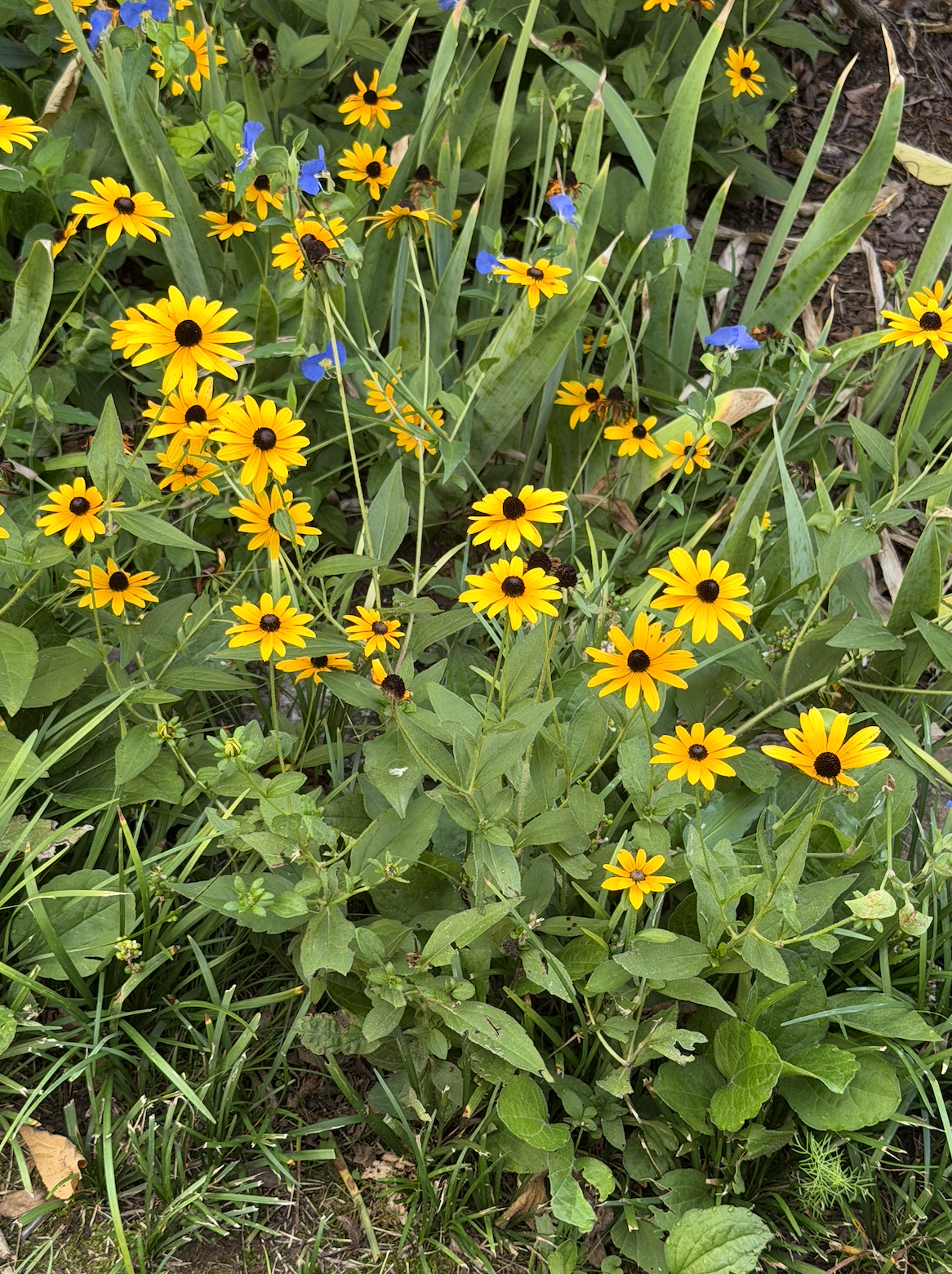
It’s fall in Nashville—at least according to the calendar. The thermometer is still hovering near 90, but pumpkins are everywhere, giving me hope that cooler weather is on its way. I remain grateful that Nashville still has four seasons!
I’ve included my reflection on this Sunday’s Gospel below. You can also read it on my website. I love spending time with the Sunday readings, listening for what they might have to say about our ordinary lives.
As I sit with the Gospel, I find myself thinking of you. These reflections are part of a conversation I have with myself, with the Christian spiritual tradition, and with you. Scripture meets us where we are, raises questions, and reminds us of the mysterious ways our lives are connected. I consider each of you part of that conversation. You matter to me, and you matter in this world, often in ways you may never fully see.
An Invitation: A Writing Place Retreat at St. Mary’s Sewanee
In early February 2027, I’ll be co-leading a retreat with the Rev. Tambi Brown Swiney at St.
Mary’s Sewanee: A Writing Place Retreat: It’s Not on Any Map.
Learn more about the retreat and register here.
What makes a place part of us? Is it the landscape, the people, the memories, or the stories we carry long after we’ve left? Together, we’ll explore how the places we inhabit—and the places we carry within us—shape our lives and our spirits. Through writing prompts and guided practices, we’ll find ways to begin writing, move beyond the blank page, and make room for the stories, memories, and insights that emerge when we slow down and pay attention. You don’t have to be a writer to participate. Curiosity and a willingness to notice your own life are enough.
Each morning, those who wish to join us can begin the day with Centering Prayer before breakfast, making space for silence and listening.
Scholarships are available, so please don’t let financial concerns keep you from considering the retreat. If writing about place calls to you, I hope you’ll join us at St. Mary’s Sewanee.
Thank you for being part of my life and for all you bring to this ever-changing, yet somehow enduring, world.
Peace,
Robbie
Gospel Reflection: Matthew 22:15–21
Transcending Boundaries
If we are honest, most of us prefer a world made of straight lines and clear boundaries. We like to know exactly where we stand, who is in, and who is out. Certainty breeds a quiet comfort. I sometimes crave a religion that operates like a well-drawn map or a flawless checklist—something that tells us precisely how to stay pure and avoid the terrifying complexity of being alive. I want faith to be easier.
But the Gospels rarely leave us in perfect certainty.
Instead, like today, they drop us into the dusty, tension-filled reality of first-century Palestine. In today’s passage, the air is thick with anxiety. Jesus is standing in the temple precincts, surrounded by his adversaries. Two groups who normally despise each other—the deeply religious Pharisees and the politically compromised Herodians—have formed an alliance to build a trap. They walk up to him, smiling through their teeth, and confront him: “Is it lawful to pay taxes to Caesar, or not?”
They didn’t want a conversation; they came armed with an “either/or” question because an “either/or” question is a weapon designed to hurt. They wanted to force Jesus into a tight corner where any direct answer would destroy his message.
We know this weapon well because we use it on each other every day. We live in a culture that has lost its appetite for nuance. We love to build verbal traps, demanding: Are you with us or against us? Pick a party, a tribe, a hashtag.
We even set these traps at our own kitchen tables. Imagine a family gathering where someone brings up a headline they saw online. Notice how quickly the air changes. The conversation becomes a loyalty test. Someone asks a pointed question, cloaked in casual chatter: “So, I assume you agree with what they’re doing?”
Nuance is complicated and often treated as a betrayal.
We pick sides because they feel safe and help us decide if someone is a friend or enemy. It saves us the hard, holy work of looking into another person’s eyes and listening to a story that might disrupt our tidy worldview.
But look at Jesus. When they push him into the corner, he refuses to step into the trap. He doesn’t take a side. Instead, he asks to see a coin, dragging his listeners into the gray area. By pulling out a Roman coin inside the temple, he essentially says, “Look at your own hands. You are already living in the messy middle.”
Jesus refuses the tight corners because he knows that God does not fit in them. He invites us out of the claustrophobia of our tribes and back into the open, spacious, and often gray areas where faith can be challenging. There, God infuses those hard spaces with love that transcends our need to choose sides.